scpmkj@gmail.com
Get A Free Quote


 share
share
The inkjet printer uses the principle of charged ink particles deflected by a high-voltage electric field to print patterns, characters and numbers on the surfaces of various objects. It is a high-tech product integrating mechatronics.
1. Continuous inkjet technology (Continuous Inkjet Printer)
Under the pressure of the ink supply pump, ink passes through the ink path pipe from the ink tank, adjusts the pressure and viscosity, and enters the spray gun. As the pressure continues, the ink is ejected from the nozzle. When the ink passes through the nozzle, it is broken by the action of the piezoelectric crystal. A series of continuous ink drops with equal spacing and same size, and the ejected ink stream continues to move downward and passes through the charging electrode to be charged, where the ink drops are separated from the ink line. A certain voltage is applied to the charging electrode. When the ink droplet is separated from the conductive ink line, it will instantly carry a negative charge that is proportional to the voltage applied by the charging electrode. By changing the voltage frequency of the charging electrode to be the same as the frequency at which ink drops break, each ink drop can be charged with a predetermined negative charge. Under the continuous pressure, the ink flow continues to move downward and passes between two deflection plates with positive and negative voltages respectively. The charged ink drops will deflect when passing through the deflection plates. The degree of deflection depends on the amount of charge they carry. Uncharged ink drops will not deflect and will fly downward and flow into the recovery tube. Finally, it is returned to the ink tank for recycling through the recycling pipe. The charged and deflected ink drops fall at a certain speed and angle onto objects passing in front of the vertical nozzle head.
2. Drop On Demand technology
There are three types of inkjet printers for on-demand inkjet technology, piezoelectric inkjet technology, pressure-valve inkjet technology, and thermal foaming inkjet technology, each of which has a different working principle.
1) Piezoelectric inkjet technology: Piezoelectric inkjet printers are also called high-resolution inkjet printers or high-resolution inkjet printers. On the integrated nozzle, 128 or more piezoelectric crystals respectively control multiple spray holes on the nozzle plate. Each nozzle is processed by the CPU and then outputs a series of electrical signals to each piezoelectric crystal through the driving plate. The piezoelectric crystals deform, so that ink is ejected from the nozzle and falls on the surface of moving objects, forming a dot matrix, thereby forming characters, numbers or graphics. Then, the piezoelectric crystal returns to its original state, and new ink enters the nozzle due to the surface tension of the ink. Because the density of ink dots per square centimeter is high, piezoelectric technology can be used to spray print high-quality text, complex logos, barcodes and other information.
2)Solenoid valve type inkjet printer (large character inkjet printer): The nozzle consists of 7 groups or 16 groups of high-precision intelligent micro-valves. During inkjet printing, the characters or graphics to be sprayed are processed by the computer motherboard and output through the output board. A series of electrical signals are output to the intelligent micro-solenoid valve. The valve quickly opens and closes. The ink is sprayed into ink dots based on constant internal pressure, and the ink dots form characters or graphics on the surface of the moving object to be printed.
3) Thermal Inkjet Technolog
For short, TIJ uses a thin film resistor to heat less than 0.5% of the ink in the ink ejection area to form a vapor bubble. This bubble expands at an extremely fast rate (less than 10 microseconds), forcing ink droplets to be ejected from the nozzle. The bubble continues to grow for a few microseconds before fading back onto the resistor. When the bubble disappears, the ink in the nozzle retracts. Surface tension then creates suction.
Choice of inkjet printers in different industries. Inkjet printers are used in many industries such as food, beverage, building materials, wire and cable, medicine, chemicals, electronics, etc., so it is especially important to choose the inkjet printer that is most suitable for the product type.
1) Small character inkjet printer: It can be used in almost all industries and has a wide range of uses, accounting for 80% of the market. Insuitable types: silicone rubber, Teflon, etc.
2) High-resolution inkjet printer: Also known as high-definition inkjet printer, also known as DOD inkjet printer. Suitable for a few industries such as plastic pipes and cartons. The high-resolution inkjet printer is mainly used for barcode spray printing. Good high-resolution can bring a database to perform variable barcode spray printing.
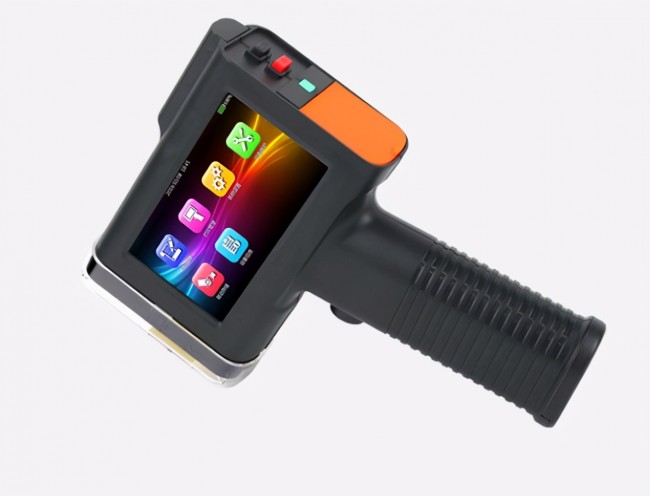
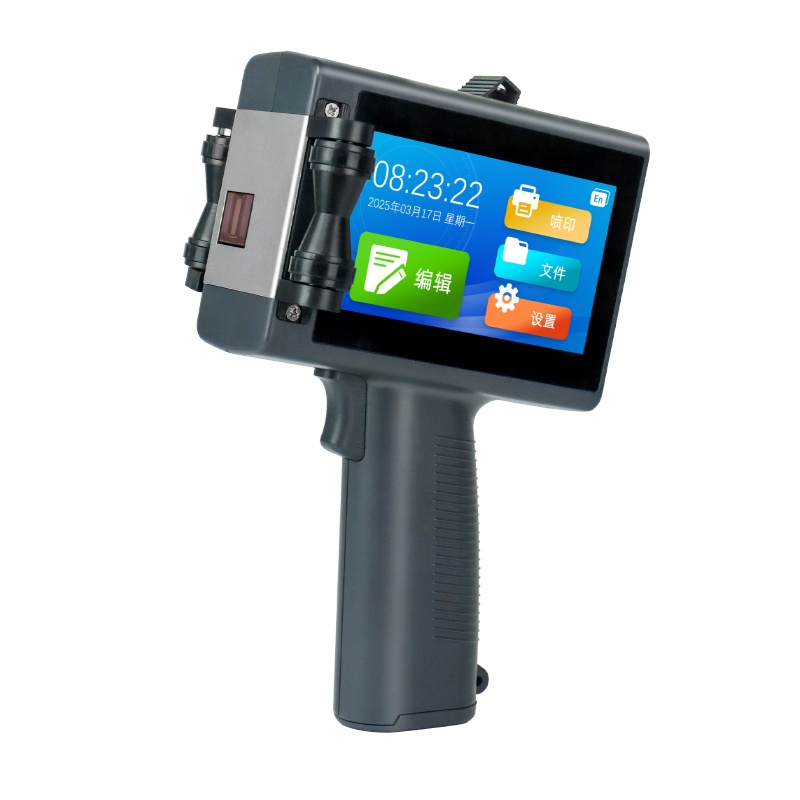
3) Hand-held inkjet printer: suitable for large items such as plates and cartons and products without fixed production lines. The main feature is that it is convenient to mark and print with hand. Disadvantages: the position of the inkjet print is not fixed, and the appearance is poor.
4) Laser inkjet printer: It is suitable for almost all industries. For the alcohol industry, the temperature of the hot filling assembly line is very high, and ink inkjet printers are not suitable. Laser inkjet printers can only be used to print. However, when using a laser inkjet printer to print, the surface of the product will be damaged, so users should consider carefully when making choices.
5) Intelligent inkjet printer: It is suitable for surface printing of metal, plastic, wood, aluminum foil, cartons and building materials, and it is very convenient to operate.
6) Supervision code inkjet printer: Aiming at the use of various electronic supervision code equipment, it solves problems such as duplicate barcode, barcode error, and barcode cannot be recognized in the printing of drug supervision codes.