scpmkj@gmail.com
Get A Free Quote
 share
share
In the construction industry, inkjet printers are being used more and more widely. Among them, UV inkjet printers are gradually favored by construction companies due to their advantages such as high definition, high durability and environmental protection. This article will introduce in detail the use and advantages of UV inkjet printers on construction pipes.
1. Characteristics of UV inkjet printer
The UV inkjet printer uses UV ink, which has the advantages of high definition, high durability and environmental protection. The inkjet printer adopts a nozzle device and a control system, which can adjust the inkjet content, font, size, direction, etc. according to the material and processing method of the pipe surface to achieve high-precision inkjet printing effect. At the same time, the UV inkjet printer also has the advantages of stable operation, convenient maintenance, and wide application range.
2. Application of UV inkjet printer in construction pipes
1. identification shall be clear
The UV inkjet printer prints production date, batch number, model and other information on the surface of construction pipes, with clear identification and easy identification. Using UV ink, high-definition code can be formed on the surface of the pipe, and the code content can be clearly seen from different angles.
2. anti-counterfeiting traceability
By using UV inkjet printers, construction companies can spray print unique identification codes on pipes to achieve anti-counterfeiting traceability of products. This helps protect the company's brand image and increase consumers 'trust in products.
3. improve production efficiency
UV inkjet printers can achieve automated production, reduce manual operations, and improve production efficiency. At the same time, the inkjet printer also has the advantages of low failure rate and easy maintenance, which helps companies reduce production costs.
4. Environmental Protection and energy saving
UV inkjet printers use UV ink, which has less volatile organic compound (VOCs) emissions and is more environmentally friendly than traditional ink inkjet printers. At the same time, the inkjet printer adopts LED curing method, which consumes less energy and saves energy costs for enterprises.
3. The choice of UV inkjet printer
1. Select the right inkjet printer according to the pipe material
Different pipe materials have different requirements for inkjet printers. For example, metal pipes require a metal-specific inkjet printer, while plastic pipes can use a plastic-specific inkjet printer. When selecting an inkjet printer, factors such as the material, surface smoothness, and hardness of the pipe need to be considered to ensure good inkjet printing results.
2. Consider coding effect requirements
Construction companies need to choose the appropriate coding effect based on actual needs. If you only need simple identification, you can choose an ordinary UV inkjet printer; if you need high-demand coding effects such as high definition and high durability, you need to choose a higher-level UV inkjet printer.
3. Consider production efficiency requirements
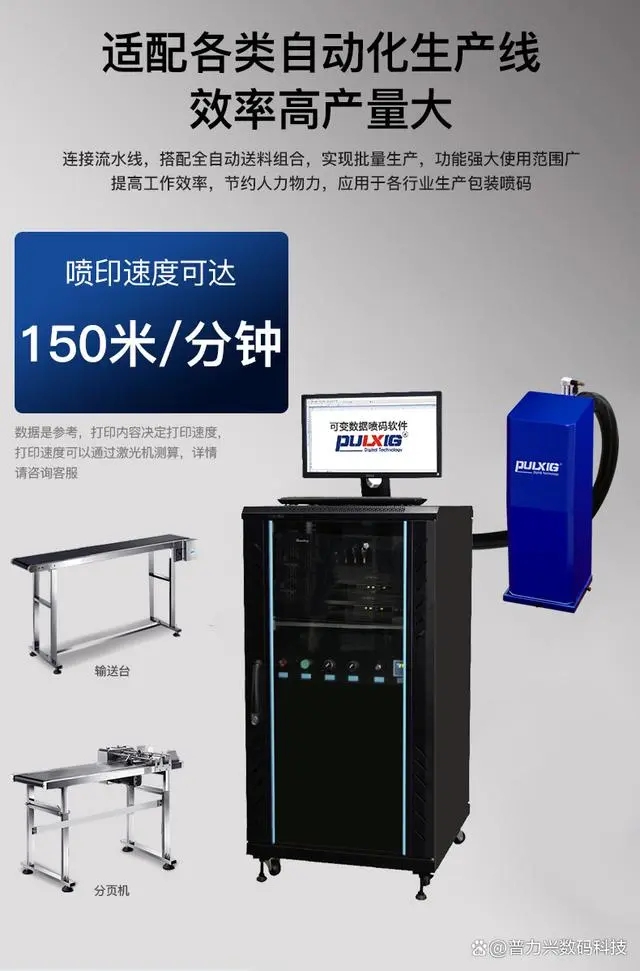
Construction companies need to select the right inkjet printer based on actual production conditions. If you need to improve production efficiency, you can choose a more automated UV inkjet printer or an online UV inkjet printer that matches the production line.
4. Consider environmental protection and energy conservation requirements
If construction companies pay attention to environmental protection and energy conservation, they can choose UV inkjet printers that use environmentally friendly inks and UV inkjet printers that use energy-saving technologies such as LED curing methods.
IV. Summary
The application of UV inkjet printers on construction pipes has many advantages, including high definition, high durability, and high degree of automation. Construction companies need to select the appropriate UV inkjet printer type and model according to actual needs to ensure good inkjet printing effect on the surface of building pipes and improve production efficiency, anti-counterfeiting traceability, and environmental protection and energy conservation.