scpmkj@gmail.com
Get A Free Quote


 share
share
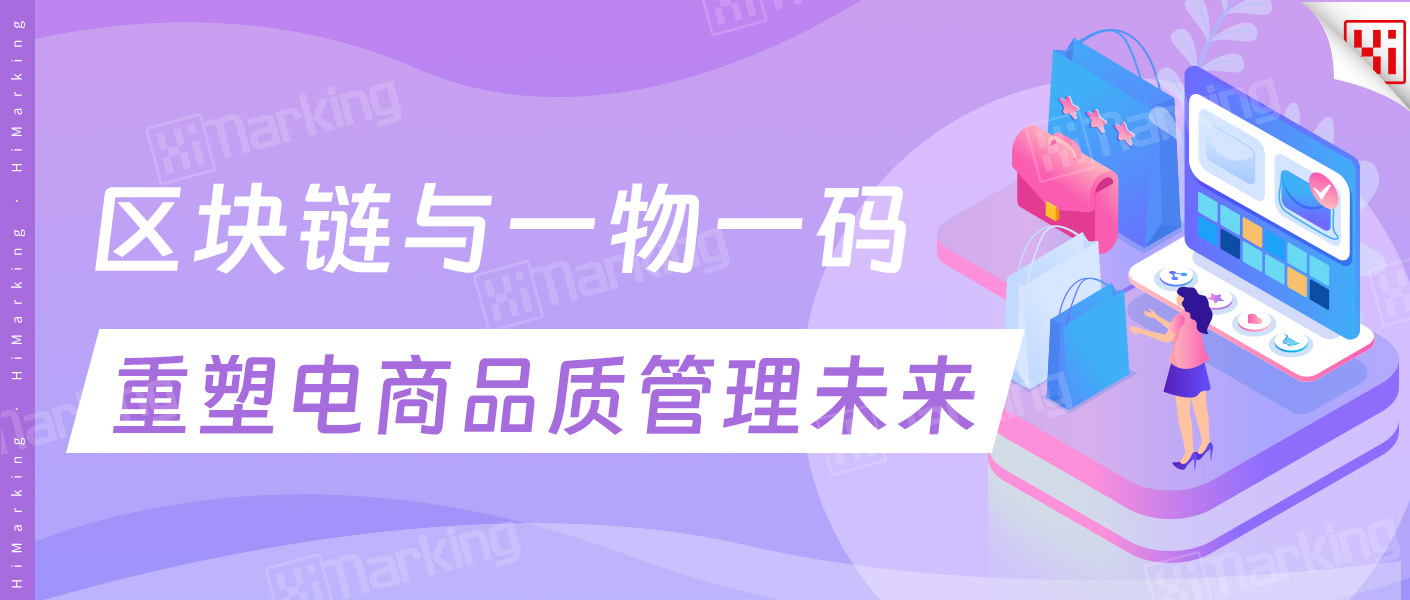
In today's era of e-commerce prosperity, consumers are paying increasing attention to the quality of products. In order to win the trust of consumers and market recognition, merchants continue to explore new technologies and methods to improve the quality and reliability of their products. Among them, blockchain technology and one-thing-one-code technology have injected new vitality into e-commerce quality management.
 x128.jpg 300w, https://www.himarking.com/file/2023/12/www.himarking.com-20231213-1024x436.jpg 1024w, https://www.himarking.com/file/2023/12/www.himarking.com-20231213-768x327.jpg 768w" sizes="(max-width: 1410px) 100vw, 1410px" alt="">
1. Transparency and immutability of blockchain technology
Blockchain technology has brought unprecedented transparency to e-commerce quality management. Consumers can query detailed information about goods through blockchain technology, including production process, source of raw materials, production batches, etc. This seems to open a "transparent window" for products, allowing consumers to have a more comprehensive understanding of the quality of products and make more informed purchasing decisions.
At the same time, the immutable nature of blockchain technology has established a solid brand image for merchants. By recording product information, merchants give consumers a sense of trust in the brand, thereby increasing sales and reputation.
2. Refined management of one object and one code technology
The one-thing-one-code technology gives each product a unique "ID card". Consumers can easily inquire about the production, circulation and sales information of goods by scanning QR codes or RFID tags. This not only allows consumers to understand the quality assurance measures of products, but also allows merchants to achieve refined management of products.
At the same time, the one-object-one-code technology also provides regulatory authorities with convenient regulatory tools. Through random inspections and supervision, we can effectively prevent the inflow and outflow of counterfeit and shoddy goods and ensure fair competition in the market.
HiMarking pointed out that by combining blockchain technology with one-thing-one-code technology, e-commerce quality management will be more complete. Consumers can inquire about all-round information about products, including production processes, logistics information, etc.; merchants can use the immutable nature of blockchain technology to establish brand trust, and at the same time use one-object-one-code technology to accurately manage products; Supervision departments can use the transparency of blockchain technology to supervise merchants 'business behaviors, and at the same time use one-object-one-code technology to conduct rapid random inspections and supervision of products.
1. Consumers can obtain the entire process information of the product by scanning the QR code or RFID tag on the product. This information includes production date, production batch, source of raw materials, production process, logistics information, etc., allowing consumers to fully understand the quality status of products and production process. At the same time, consumers can also evaluate the reputation of merchants by viewing this information, so as to choose more reliable merchants to purchase. This transparent and comprehensive information query not only enhances consumers 'purchasing confidence, but also helps cultivate consumers' loyalty to the brand.
2. Merchants can use the immutable nature of blockchain technology to establish and enhance their brand image. Under the traditional model, it is difficult for merchants to prove that the goods they sell are authentic and reliable. However, by recording product information on the blockchain and giving each product a unique identifier, merchants can prove that the goods they sell are authentic and reliable. This will help improve consumers 'trust in the brand and increase merchants' sales and reputation. At the same time, merchants can also use one-item-one-code technology to finely manage products to ensure the regularity of purchase channels and the smooth flow of sales channels. In addition, it is related to consumption. Information sharing between regulators and regulators also helps increase merchants 'awareness of compliance and responsibility.
In addition to the above-mentioned consumers and merchants, the application of blockchain and one-thing-one-code technology in e-commerce quality management also helps to optimize and coordinate the entire supply chain. Through the combined application of these two technologies, all links in the supply chain can be seamlessly connected and worked collaboratively to improve overall efficiency and reduce costs while enhancing the traceability of the supply chain to reduce the occurrence of risks. In addition, it can also promote information sharing and cooperative innovation in the supply chain to accelerate the circulation of goods and the response speed of the market.
Applying blockchain technology and one-thing-one-code technology to e-commerce quality management can achieve more efficient and transparent regulatory effects, while providing consumers with a better shopping experience, establishing a better brand image for merchants, and providing regulatory authorities with more effective regulatory tools. In the future, with the continuous advancement of technology and the continuous expansion of application scope, e-commerce quality management will become more complete and efficient and lay a solid foundation for the sustainable development of the e-commerce industry.
In the future, the application of blockchain and one-object-one-code technology will become more extensive and in-depth.
Application of smart contracts: Smart contracts in blockchain technology can automate the execution of contract terms and improve transaction transparency and security. In the future, smart contracts can be applied to e-commerce quality management to ensure that goods comply with the quality standards stipulated in the contract during the production, circulation and sales process.
Integration of 5G technology: The arrival of 5G communication technology will bring new opportunities for e-commerce quality management. The high speed, low latency and large number of connections of 5G networks can improve data transmission efficiency and system response speed, allowing consumers to query product information more quickly, and merchants to manage and monitor products more efficiently.
The combination of AI and big data: Artificial intelligence and big data technology can provide stronger support for e-commerce quality management. By analyzing a large amount of product data and market information, AI algorithms can predict the quality trends and market trends of products, helping merchants make smarter decisions. At the same time, AI can also be applied to consumer behavior analysis to provide personalized marketing and services for merchants.
Construction of green supply chains: With the improvement of environmental awareness, green supply chains will become an important development direction for e-commerce quality management. By applying blockchain and one-thing-one-code technology to build a transparent and traceable green supply chain, it can effectively reduce the flow of counterfeit and shoddy goods into the market, while reducing energy consumption and emissions in commodity production and circulation, and achieving sustainable development.
Global cooperation and collaboration: In the context of globalization, cooperation and collaboration in e-commerce quality management will become closer. Regulatory authorities, businesses and consumers from all over the world can jointly participate in a global quality management system to achieve information sharing, standardization of standards and integration of resources. This will help improve the overall level of global e-commerce quality management.
In the future, e-commerce quality management will usher in broader development space and unlimited possibilities. With the continuous innovation and advancement of technology, the continuous expansion of application scope and the active participation of all parties in cooperative e-commerce quality management will provide consumers with a better shopping experience, establish a better brand image for merchants, and provide more effective regulatory authorities with regulatory tools.