scpmkj@gmail.com
Get A Free Quote


 share
share
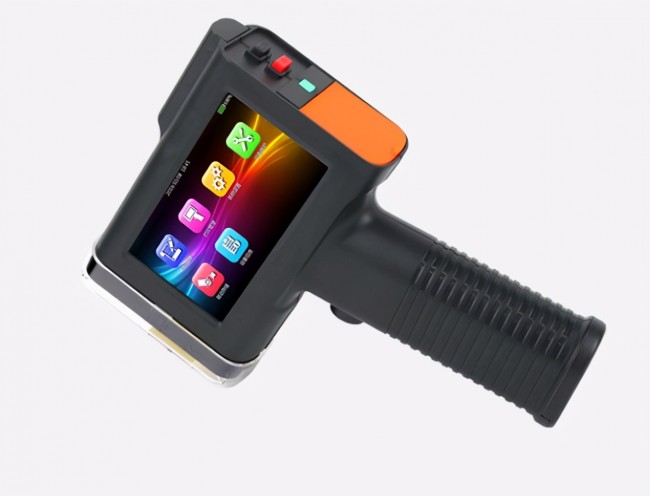
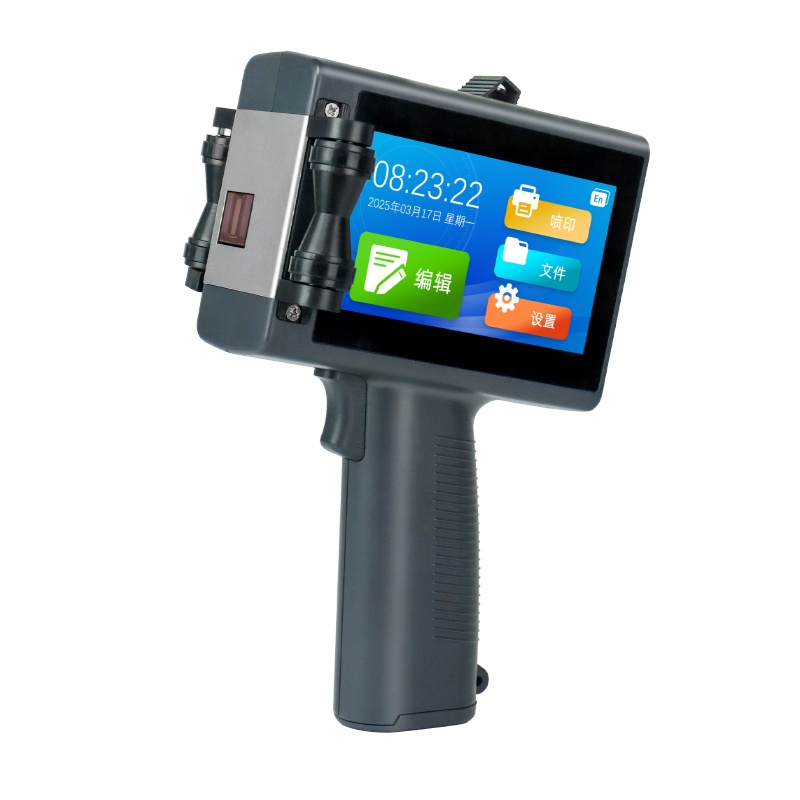
The innovative application of handheld inkjet printers in the industry has led the development of marking equipment in this era. Unconsciously, great changes have arrived. More users have begun to pay attention to the handheld field, and gradually introduced this smart device into industrial packaging labeling., solve various problems in product identification and empower production, processing and manufacturing.
In the field of one object and one code, we are faced with difficulties such as equipment communication, connecting different equipment, and connecting with factory MES\ERP. Many traditional small-character inkjet printers are no longer able to meet this demand. Handsets are famous for their low prices and complete functions., enter various industries in a timely manner and shine brightly.
As the market for inkjet marking equipment matures, its functions are more diversified, its prices are more transparent, and its applications in different industries have also improved. Today, I will share with you some relevant price status and future development trend analysis of handheld inkjet printers.
Handheld inkjet printer prices and development trends
1. Price status of handheld inkjet printers
If we want to have an accurate understanding of the price of handheld inkjet printers, we need to conduct a deeper analysis and understanding. First of all, there must be a distinction between the types of handheld printers. This distinction can be based on brand, specification, and model. Carry out in three dimensions.
Brands, there are many manufacturers making handheld inkjet printers in China, while some foreign imported brands are relatively few. This is also due to the characteristics of handheld inkjet printers. The foreign brands are mainly HP HP, which provides ink cartridge technology and ink cartridges. Many domestic brand manufacturers use HP ink cartridge technology as the basis for supporting assembly machines.
Specifications mainly refer to the type of ink in the inkjet printer, including two common inks: oily ink and quick-drying ink. The structure of the handheld machine is quite special. The ink and the nozzle are generally integrated to form a nozzle. After the ink is used up, it will be replaced with a new ink cartridge, and the nozzle is also new, which will greatly reduce the operating failure rate, which is also the advantage of the handheld machine.
The model has been greatly improved, from the printing effect to the range of use. From the coding of the product itself to the packaging logo, the handheld inkjet printer not only can be operated flexibly by hand, but also can be transformed into online inkjet printing equipment through simple bracket modification., which has had a greater impact on the small character inkjet printer market.
The price of a handheld inkjet printer with complete mainstream functions is now around 3000 yuan. Some on the Internet (Taobao, Pinduo) have paid less than 1000 yuan. At this time, when purchasing, users should pay attention to the brand, product hardware, software, and after-sales service support and other related information to avoid buying one-time products.
2. Future development trend of handheld inkjet printer prices.
Cost is a key link that customers using handheld phones cannot ignore. Although the integrated design of the nozzle greatly reduces the failure rate, it also leads to a relatively high cost of the ink cartridge, and the ink content is slightly lower, only 42 ml. In continuous large-scale work, one ink cartridge will be used up quickly, and the overall cost is high.
In the future, on the one hand, it is to increase the ink capacity of the ink cartridge, thereby extending the cycle of replacing the ink cartridge at work; on the other hand, it is to increase the scope of jet printing and increase the width of scene applications, further expand the sales range of handheld phones and reduce costs from the side.
The cost composition of a handset is, on the one hand, the output effect. The more manufacturing and sales are made, the lower the comprehensive cost (labor and material resources) will become. On the other hand, technological innovation, and more targeted technological innovation can also effectively reduce the production and development costs of handsets and bring better economic benefits.
Boldly predicted that in the next five years, the price of basic handsets will reach around 500 yuan, and the price of smart handsets for high-end applications and large-format handsets will remain at around 3000 yuan.
In terms of the price of handheld ink cartridges, as production increases, the price will gradually decrease in an orderly manner, and the types of ink will be further expanded, with new application space and development prospects in more industry fields and more product materials.
3. Difficulties faced in the development of handheld inkjet printers.
There is another problem that we cannot ignore, which is the limitations of handheld inkjet printers. Handsets have been around for a long time. One of the important reasons why they have not been promoted is their limitations. With the development of ink and ink cartridge technology, it has only entered the eyes of more users in recent years.
Faced with some high-end application needs, such as high-speed online coding, large-scale coding, requirements for ink adhesion or content type (such as variable QR codes or barcodes), or communication connections, integrated use, etc., handsets still need some time to develop and adapt to meet some more difficult identification application scenarios.
In terms of miniaturization, handheld phones do a better job and are also a very excellent representative of many intelligent inkjet printers. In some industrial identification application scenarios, situations where space is small and the environment is harsh. At this time, small size becomes critical, allowing for better matching and system integration.
The increase in the application of one object and one code has forced many traditional inkjet printer brand manufacturers to upgrade their technology to adapt to demand development. Handsets are no exception. The technology is becoming more and more mature, the hardware system is becoming more and more stable, and the software expansion and communication connection capabilities are also very strong, and the development space in the future is very large. Better development will bring added value to users and enhance the comprehensive value and experience of product logos.