scpmkj@gmail.com
Get A Free Quote


 share
share
As a printer manufacturer, it will be very difficult in the days to come, because with the emergence of a large number of homogeneous products, as well as the transformation and upgrading of Industry 4.0 and various automated equipment production lines, traditional coding methods will gradually become ineffective and will be quickly eliminated in the next few years.
Huge problems that handheld inkjet printers are about to face
1. Handheld inkjet printer product innovation and diversified development trends.
It cannot be limited to manual coding. The benefits and disadvantages of manual coding are very obvious. The advantage is that it is convenient, and product coding can be carried out anytime and anywhere. The shortcoming is also very prominent, that is, it cannot be mass produced.
Today, when competition is intensifying, small and medium-sized enterprises are already very sad. What do we need to improve our competitiveness at this time? One is innovation and the other is efficiency.
Time is money, especially for factories. How to assign codes to more products in a shorter period of time to form clear, beautiful and easy-to-read identities? Of course, choose a faster and more automated coding equipment.
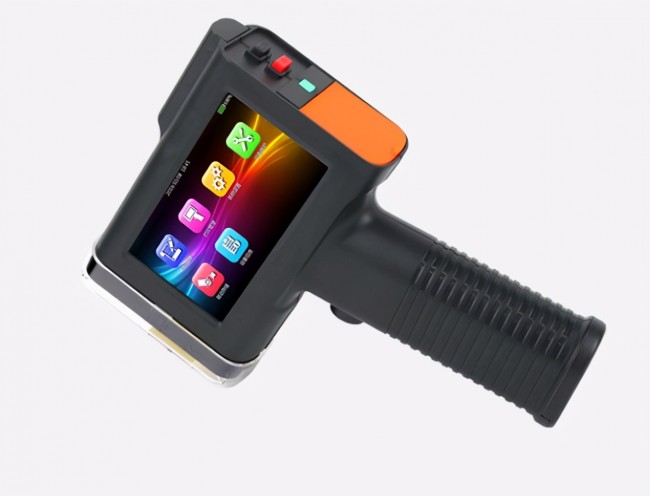
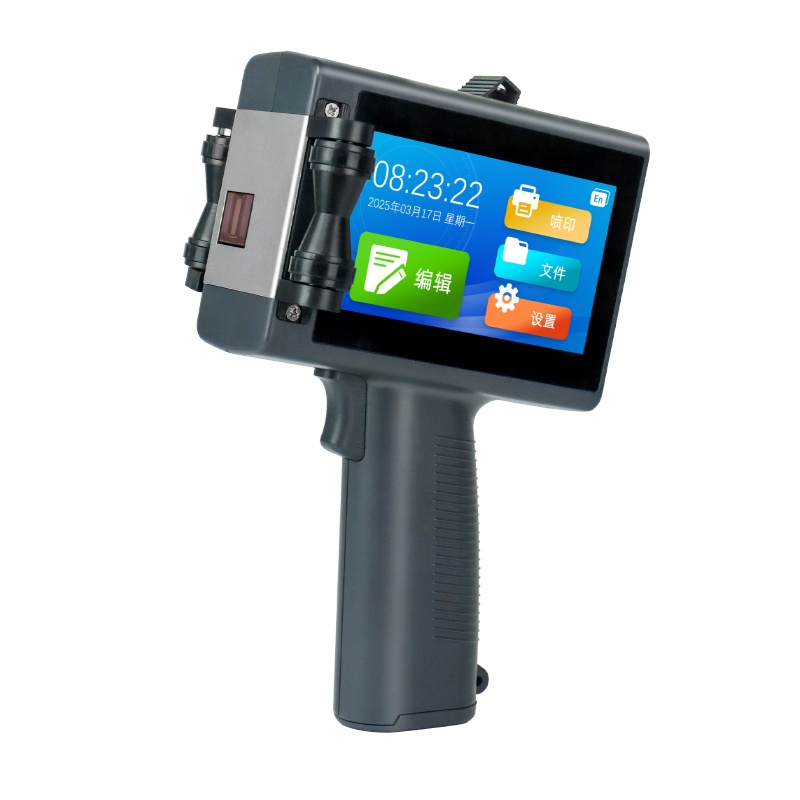
WIFI communication technology transmission enables the printing of variable QR codes. Qianli T-series handheld inkjet printers have put a lot of effort into research and development in the communication module, and can finally be disconnected from the line and achieve "wireless". In some highly demanding smart factories, this feature will also be Qianli's core advantage.
The diversity of industries, from food and beverage to daily necessities, as well as building materials and cables, all require clear logos to trace traceability and achieve traceability. A better carrier is QR code. A handheld inkjet printer can meet this need and realize DPI can achieve a clear logo of 300 and achieve a 100% scan rate.
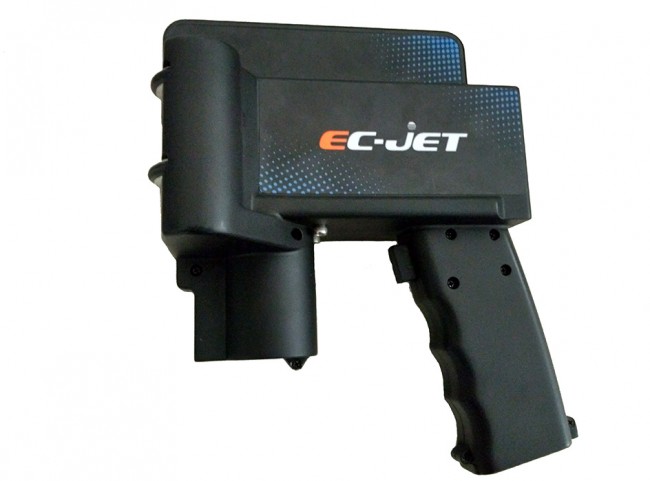
The application of new technologies has increased the application power of handheld inkjet printers
2. The application of new technologies has made handheld inkjet printers more widely used.
Hand-held inkjet printers are still unable to be used on some large outer packages due to the limited printing height. Under the exploration and support of HP technology, a 1-inch nozzle has been introduced, which is different from traditional dual-row nozzles. This update is that 2 rows of nozzles can be sorted in parallel to achieve a large-format 12.7X2, that is, a 25.4mm content logo can be printed at one time.
The application of new technologies has allowed handheld inkjet printers to expand the application scope of the industry. In the market applications of some high-resolution inkjet printers that previously could only be used with large nozzle size such as Xar, they rely on low cost, low maintenance, and more convenient and smaller features to seize some market share.
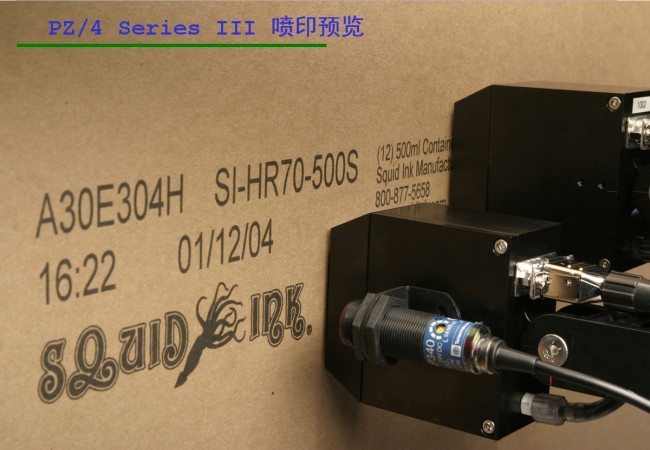
In addition to the update iteration of the handset itself, there is another point that we must pay attention to, which is the online and handheld dual-use handheld inkjet printer. Through the development of large brackets and small brackets, it can completely match the T-series intelligent handheld inkjet printer. By installing an electric eye sensor, online inkjet printer can be realized, which can completely replace some application scenarios of small character inkjet printers and high-resolution and laser inkjet printers, which is also a big improvement.
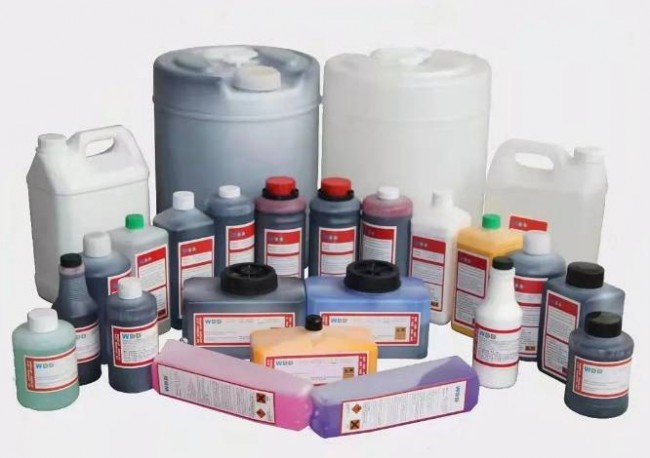
Of course, it is also inseparable from the update of inks and inks. The new technology has undoubtedly also been applied to the improvement of ink cartridges and the optimization of ink characteristics and characteristics, making our ink color types and model types more diversified, which can meet the needs of some plastics, metals, films and other materials that have been difficult to print in the past.
As a manufacturer, we need to pay more attention to product quality and services
3. We should not only fight for price, but also strive for quality and service.
In China, the number of inkjet printer manufacturers is already very large. Because the threshold in this industry is relatively low and the technology has not yet reached the barrier level, there will also be many cross-industry competition. For example, manufacturers that originally made laser cutting and manufacturers that originally made manual printers can all transform into inkjet printer manufacturers.
When more manufacturers increase, they face competition in the market. As the number of users decreases, the difficulty of obtaining recognition from new users further increases, and more manpower, material resources, and promotion and operation costs are needed. One point that must be mentioned here is the construction of after-sales service outlets.
The strategies of manufacturers will also differ. Some brand manufacturers will choose to go through channels and develop agents to carry out integrated supply and marketing of their products, while some manufacturers, such as KGK, Keene and other well-known foreign imported brand inkjet printer manufacturers, will Adhere to direct sales and need to set up offices and service organizations in more prefecture-level cities, counties, and districts to provide customers with comprehensive and efficient service guarantees.
Only by keeping up with service guarantees can we meet today's industrial acceleration, manufacturers 'needs for efficiency and avoid a large amount of cost waste once shutdown or production is stopped.
At the Double 11 Taobao Tmall Shopping Festival in 2020, handheld inkjet printers hit a new low in history. Many manufacturers sold them directly for 500 yuan. The competition for this price has undoubtedly developed to an extreme situation. Once the profit rate falls to the bottom, life for many handheld inkjet printer manufacturers will be even more difficult in the future.
Faced with high costs, where will handheld inkjet printer manufacturers go in the next five to ten years? How to have the ability, capital and talent strength to develop new equipment to meet the development of Industry 4.0 and industrial intelligence? How to replace the core technical constraints of some imported brands through the research and development of core technologies of handheld inkjet printers? These are all core key points that we need to wait and see!