scpmkj@gmail.com
Get A Free Quote


 share
share
In the e-commerce warehouse, packer Xiao Wang was worried about a pile of scattered cartons. Different batches of products and different specifications of outer boxes have different batch numbers and QR codes that need to be sprayed. Fixed inkjet printers cannot be used. Hand-written inkjet printing efficiency is low and the handwriting is still crooked. Customers have complained that the scanning code failed; what's worse is that no suitable inkjet printing equipment could be found for metal parts, pipes, and shaped cartons in the warehouse. They can only be labeled manually. The cost is high and they are easy to fall off. When there are many orders in peak season, the entire delivery process is directly dragged down.
Who is a boss in warehousing, e-commerce, and hardware processing who has not been troubled by the problem of coding for scattered packaging? For factories and warehouses with non-assembly line production and multiple batches and small batch orders, coding is never a simple "date", but a key link that determines delivery efficiency, customer reputation and operating costs. Almost all scenes cannot escape the three fatal pain points:
First, fixed inkjet printers cannot be used, which is inefficient and troublesome. Scattered products, special-shaped parts, and large goods in warehouses and workshops cannot be put on the assembly line, and fixed inkjet printers cannot be adapted at all. They can only rely on handwriting and labeling. Not only is it inefficient, but the handwriting is also easy to blur and fall off, and scanning code. The pass rate is low and customer complaints are constant.
Second, the operation of the equipment is complex and difficult for novices to get started. Many handheld inkjet printers have cumbersome interfaces, complex steps to edit content and import data, and require special training to operate. When manpower is tight during peak season, new employees are slow to get started and the coding error rate is high, which delays delivery progress.
Third, the battery life is poor and compatibility is weak, and it cannot be used in complex scenarios. Ordinary handheld inkjet printers have a short battery life and have to be charged several times a day. They are easy to run out of power when running back and forth in the warehouse. Facing different materials such as metal, wood, glass, and plastic, the inkjet adhesion is poor and can be wiped off with a wipe. It is simply impossible to meet the requirements of multi-scenario inkjet printing.
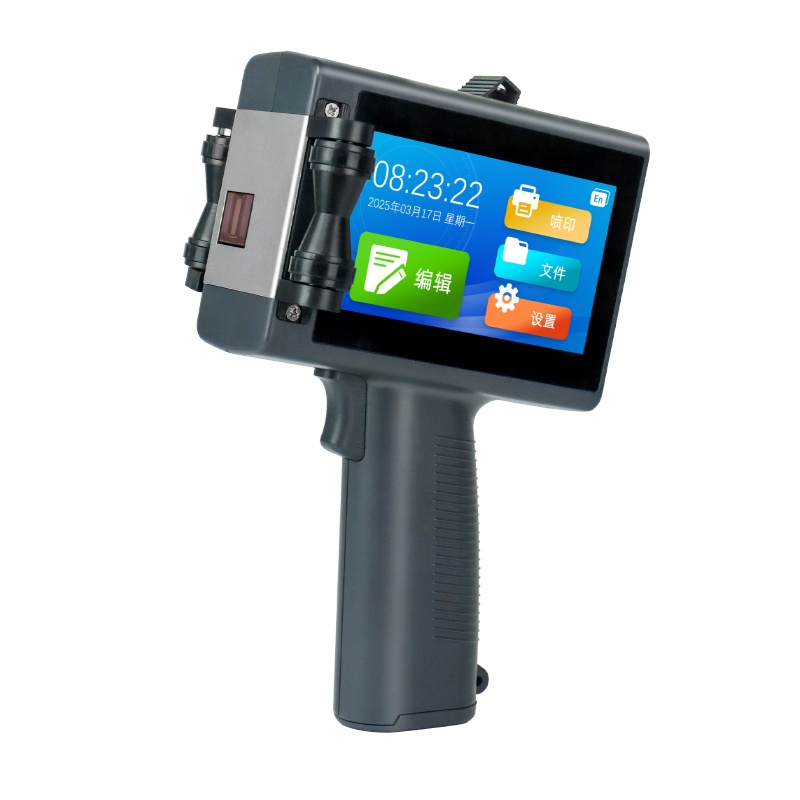
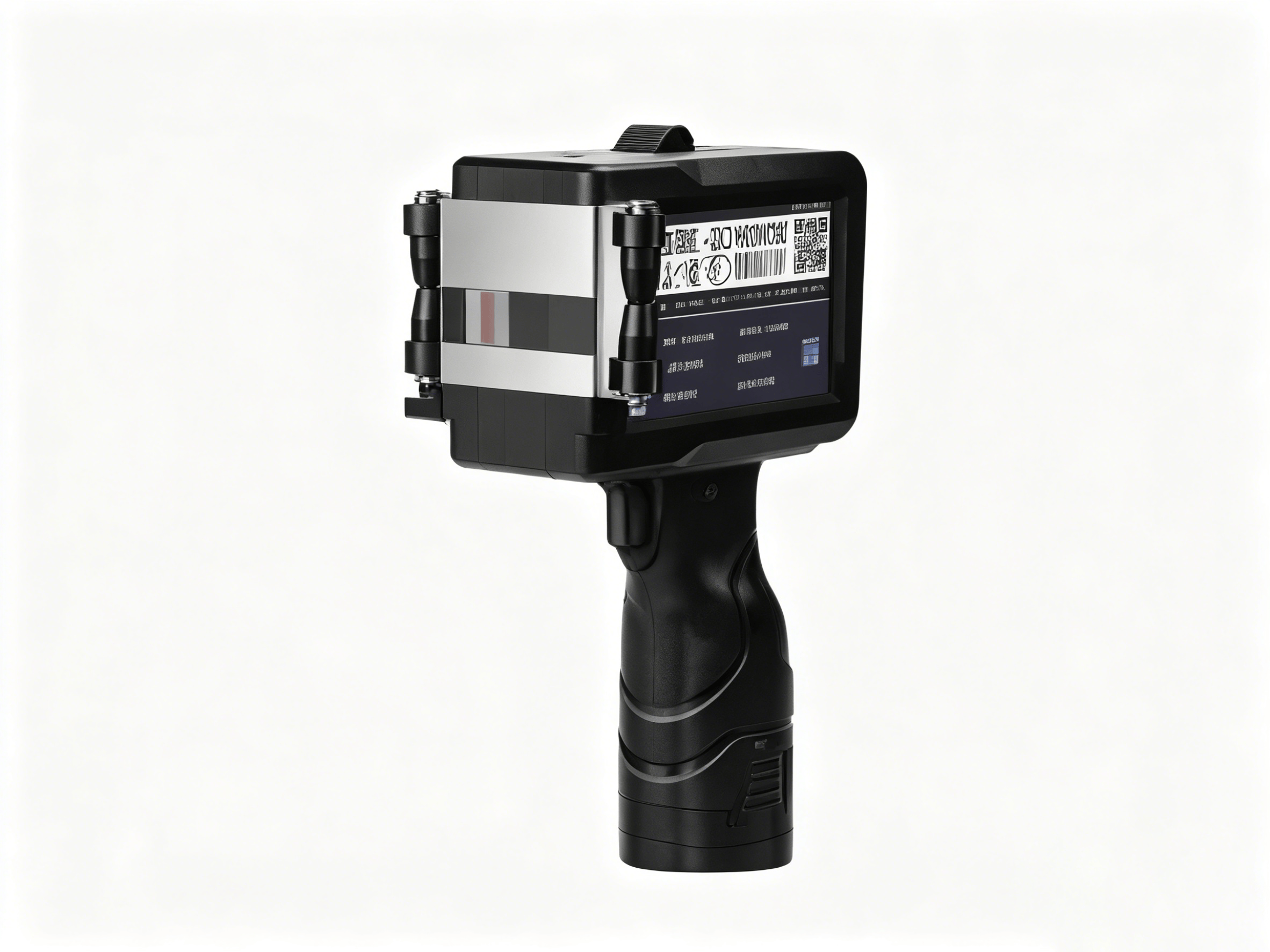
The emergence of the Vimason PF160 single-head 12.7MM handheld inkjet printer is to solve these coding problems that have plagued factory and warehouse owners for many years in one go, and turn scattered coding from an "efficiency drag" to a "flexible and efficient" right-hand assistant ".
Real customer case: E-commerce warehouses use handheld inkjet printers, which directly doubles delivery efficiency
An e-commerce warehouse in Zhejiang, which specializes in multiple categories of daily necessities and hardware accessories, has been troubled by the problem of coding in scattered packaging:
No suitable coding equipment could be found for metal parts, pipes, and shaped cartons in the warehouse. They could only be numbered by hand. The handwriting was blurred. The pass rate of scanning code was only 70%, and downstream customers complained constantly;
After replacing the Vimason PF160 handheld inkjet printer, the warehouse directly achieved a disruptive upgrade in the coding process:

The coding is clear and firm, the edge of the writing is flat, and the QR code scanning pass rate is 100%. There is no longer any customer rejection, directly saving nearly 20,000 yuan in label costs and rework losses every month;
The first thing it solves is the problem of coding adaptation for non-assembly scenarios. The Vimason PF160 adopts a handheld and portable design, and its body is light and easy to operate. Whether it is scattered cartons, large goods in the warehouse, or metal parts, pipes, and shaped products in the workshop, it can be easily coded without relying on assembly lines., no need to use fixed workstations, spray wherever you go, completely breaking the scene limitations of fixed inkjet printers, and one device can meet the coding needs of multiple materials, multiple specifications, and multiple scenarios.
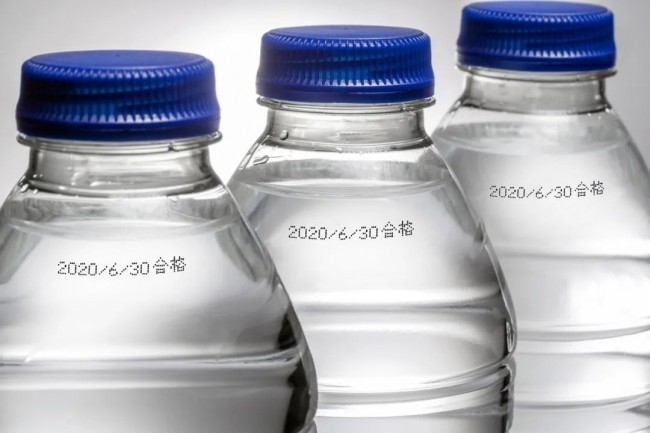
In terms of coding effect and accuracy, it has achieved the industry benchmark level. The equipment adopts advanced coding technology, the printing height is ≤12mm, supports vertical adjustable precision of 300 dpi and 600dpi, the coding is clear and sharp, the edges are flat, no smears, no burrs, QR code and bar code scanning pass rate is 100%; It can spray print text, bar code, variable code, graphics, variable data and other contents, perfectly adapt to all types of spray printing needs such as batch number, production date, traceability code, and product number, completely eliminate fuzzy coding. Customer complaints and order rejections caused by failed scanning codes.
What we understand better about small and medium-sized factories and warehouses is their intelligent and convenient design. The device is equipped with a Cortex-A7 quad-core processor, a 5-inch high-brightness capacitive touch screen, a full graphical operation interface, simple and easy-to-understand editing logic, graphic drag-and-drop free typesetting, and what you see is what you get. Even new employees who have never touched the printer can quickly get started; supports WIFI, Bluetooth, USB, RS232 multiple interfaces, and can directly import pictures, txt, and excel forms, and import batch print data with one click without manual input, greatly improving the coding efficiency.
In terms of battery life and stability, it also fully meets the needs of continuous operation. The equipment is equipped with 2600mAh original lithium battery, and the maximum working time can reach 18 hours. There is no need to charge frequently for a whole day of warehouse operations, completely saying goodbye to the embarrassment of running out of electricity in the middle; the body is strong and durable, and it is suitable for the complex working environment of factories and warehouses. The failure rate is extremely low, and later maintenance is worry-saving and labor-saving.
For factories and warehouses with multi-batch, small-batch, and non-assembly line production, a flexible, efficient, and stable handheld inkjet printer is never a cost expense, but a right-hand assistant to improve delivery efficiency, reduce operating costs, and maintain customer reputation. A VMASON PF160 handheld inkjet printer can not only help you solve the efficiency pain point of scattered inkjet printing, but also help you eliminate the high cost and low quality problems of manual labeling and handwriting inkjet printing, so that you can keep delivery efficiency and customer reputation stably when orders surge in peak season.