scpmkj@gmail.com
Get A Free Quote


 share
share
In the era when handheld inkjet printers were not yet popular, product identification was once a problem that plagued many companies. At that time, the efficiency of commodity differentiation and marking was extremely low. However, with the rapid development of social economy, circulation between industries became increasingly close, and problems such as goods fleeing and difficulty in traceability became more prominent. Traditional and old printing technology has many drawbacks, which cannot meet the precise needs of large-scale production, and is difficult to adapt to diversified product identification scenarios. The emergence of handheld inkjet printers not only solved the pain point of this industry, but also became an important force in the global industrial marking field with its flexible and efficient characteristics.
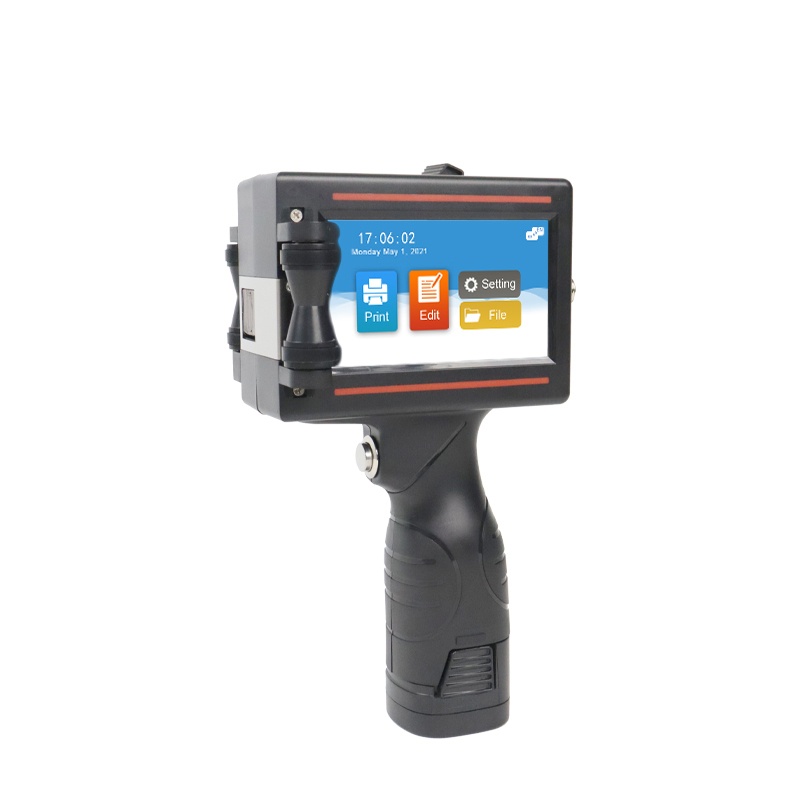
1. Deeply penetrate into life and build the cornerstone of commodity trust
The application of handheld inkjet printers has long penetrated into all aspects of life, and almost all types of products around us have left its mark. From a dazzling array of food and beverages, to wires and cables, and cigarette batteries, it gives clear "identity information" to products.
For consumers, code coding logos are a shortcut window to understand the necessary parameters of products. Key information such as production date, shelf life, production batch number, origin, and material is clear at a glance, which not only facilitates purchase, but also allows consumers to protect their legitimate rights and interests with greater confidence while protecting their right to know.
For companies, clear and lasting code coding logos are the first step in building brand reputation. It can effectively solve the problem of fleeing goods, realize full link traceability of products, and at the same time increase the added value of products. While winning the trust of consumers, it also lays the foundation for profit for market development.
2. Technological iteration and upgrading leads the marking efficiency revolution
Handheld inkjet printer technology is in the golden age of rapid development, many technical bottlenecks and operational problems have been solved one by one through continuous innovation and optimization. Compared with traditional printing methods, it shows significant advantages in all aspects:
1. Excellent printing quality: achieve high-definition and high-durability coding effect, sharp edges of text, patterns, barcodes and other information, lasting and non-fading, greatly improving product appearance texture and brand image.
Intelligent and efficient operation: automatic/semi-automatic operation, greatly reducing manual intervention, not only saving labor costs, but also simplifying the operation process to "take and use", significantly improving production and marking efficiency.
3. Adapt diverse scenarios: Break the limitations of the industry and product form, whether it is food packaging, building materials, or electronic product casings, you can flexibly complete spray printing operations, truly realizing "one machine for multiple purposes".
4. Flexible and adjustable performance: The printing speed can be freely adjusted according to the production rhythm, taking into account efficiency and accuracy, and perfectly adapting to the personalized identification needs of different industries.
3. Expand the market territory and open up a new future for green logos
In recent years, the market application of handheld inkjet printers has shown explosive growth. Its application scenarios have rapidly expanded from traditional beverage, beer, mineral water and other industries to dozens of fields such as wire and cable, non-staple foods, cigarettes, batteries, and building materials, and the market scale continues to expand.
Behind this growth trend, it reflects the growing urgency of society for safe, green and efficient signage. On the one hand, consumers 'attention to product production dates and traceability information continues to increase, and high-quality inkjet labeling has become the basic requirement for products to enter the market in compliance; on the other hand, enterprises' emphasis on green and environmentally friendly production has also promoted inkjet printing technology. is upgraded towards low pollution and low energy consumption.
With its outstanding advantages in environmental protection, convenience and efficiency, handheld inkjet printers are becoming a key tool to promote digital and intelligent upgrades across the industry. It is not only a tool for product identification, but also an important enabler for enterprises to enhance their core competitiveness and build a sustainable development model. In the future, it will surely shine in a broader field.